
*
How acupuncture can improve sleep quality.
Acupuncture and insomnia
Are you familiar with these fascinating applications that allow you to determine, by analyzing the movements and breathing of the sleeping person, the duration of sleep phases? (slow, paradoxical, intermediate)...They provide objective tracking of progress over nights and treatments for patients seeking acupuncture for sleep disorders. Ideally used together with a sleep log of subjective observations noted upon waking, the information provided by the application reassures analytical patients in their acupuncture treatment approach and provides precise information for their clinical notes. At $1, an excellent return on investment! (i.e. www.sleepcycle.com) It is certainly advisable to avoid this in patients suffering from electromagnetic hypersensitivity, a 'possible etiological factor' (or possible cause of insomnia); the phone or tablet should be placed under the pillow!
The quality of our sleep is influenced by many factors, and among the most frequent causes of sleep disturbances, we note anxiety and pain. Health conditions can also affect the duration of sleep needed. Among common causes requiring increased rest, we note hypothyroidism, immune system impairments (i.e. allergies), anxiety, depression and seasonal depression.
Why? Because sleep phases are controlled by the principles of homeostasis dictated by our biological clock. That is, the states of consciousness into which we enter while sleeping are a physiological necessity, and deprivation of one or another of these states creates a biological debt, which the body will attempt to resolve by changing sleep structure during our next sleep period.
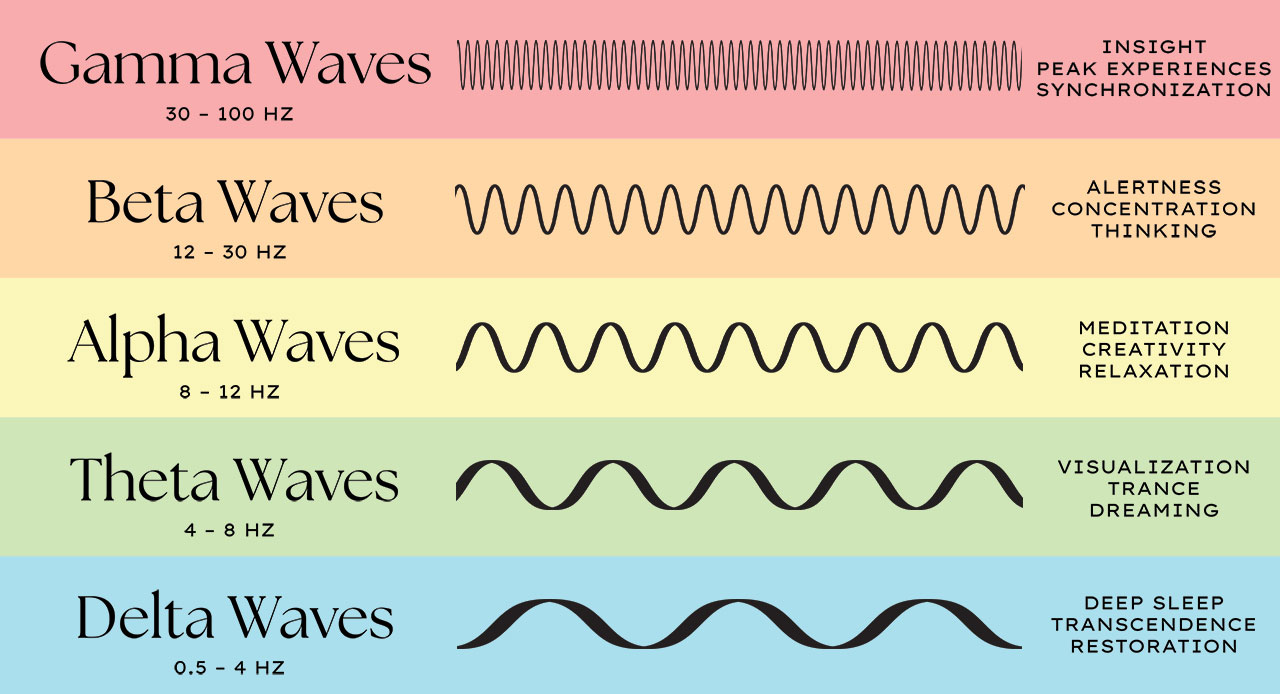 Image from DIYGENIUS
These different states of consciousness are associated with specific cerebral electrical activities and endocrine secretions. While sleeping, our brain engages in very specific recreation and our hormonal system maintains glandular activity quite distinct from that of waking.
From one animal species to another, sleep depth (or time spent in states of consciousness characterized by electrical brain activity with long waves, namely 0 to 4 oscillations per second: deep sleep) often depends on the ability to be safe from predators and dangers.
Whether you need to sleep 6, 8, or 10 hours per night, whether or not you take a nap, acupuncture can help you improve your sleep. Acupuncture, as it acts on the homeostasis (balance) of the organism, is effective for treating sleep disorders.*
The circadian cycles, which dictate our periods of sleep and wakefulness, are associated with the extraordinary yin and yang qiao mai meridians (Yin and Yang Heel Vessels). It is the meeting point of these 2 polarized energetic vessels that one can also stimulate through acupressure; I made reference to this method to combat insomnia and promote restorative sleep in a previous video:
 Acupressure Tutorial for Insomnia by Olivier Roy Acupuncturist, produced by Coup de Pouce
These cycles are primarily rhythmed by periods of light, but there can also be individual variation in the expression of these cycles. While most women need 6.5 hours and most men need 8.5 hours of continuous sleep (monophasic sleep), there are many viable polyphasic variants, which would allow reducing the total time spent sleeping. The most common being biphasic sleep, commonly called ''siesta'' in Latin cultures. This consists of a night of 5-6 hours, coupled with an early afternoon nap of 20, 60 or 90 minutes.
There are other rarer polyphasic models (uberman, dymaxion, everyman), but they work for certain people. The challenge of these special routines is to create a framework allowing you to benefit from all sleep phases, despite the reduction in time spent sleeping.
There would currently be research demonstrating that biphasic sleep, that is a slightly shorter night followed by a nap of 20 to 90 minutes approximately 7 hours after waking, has advantages, including increased productivity and cognitive abilities** compared to monophasic sleep (conventional longer night, without napping.)
Several cultures around the world take naps, but this tradition would have arisen from necessity rather than concern for performance. Today's athletes are well aware of the benefits of a nap before competition, and science may have found the reason; sleep increases the secretion of different hormones (biochemical stimulants), including growth hormone, (often used in sports doping) which helps maintain body structure and regulate metabolism, including support for maintaining blood glucose levels (blood sugar levels; which relates to energy available in circulation for muscle use.)
Let's see below how Traditional Chinese Medicine classifies the main sleep disorders. These different energetic diagnoses lead to different choices of acupuncture points to stimulate. Classification according to Olivier Roy Acupuncturist and Jeremy Ross, Acupuncture Point Combinations.*
EXCESS TYPE
Heart Fire
Insomnia, often short-term, with no sleep at all, heat sensations, especially in the head, manic agitation and possible psychosis.
Fire of the Liver and Gallbladder with Liver Yang Hyperactivity
Insomnia with irritability, difficulty relaxing, stopping, heat sensations, especially in the head, possible headache.
Fire of the Stomach and Stomach Qi Stagnation
Insomnia with intense worry and mental congestion, possible gastritis with stomach burning, or reflux.
Heart Qi Stagnation and Phlegm in the Heart
Insomnia with melancholy and depression, possible sensation of fullness/congestion in the chest, possible mental confusion.
Lung Qi Stagnation
Insomnia following bereavement or deprivation, possible sensation of fullness/congestion in the chest, possible crying.
Liver Qi Stagnation
Insomnia with depression, frustration, repressed anger, possible indigestion, possible pronounced muscle tension.
DEFICIENCY TYPE
Heart and Spleen Blood Deficiency
Insomnia with worry, fatigue, possible dizziness, palpitations, affected memory, worsened by study.
Kidney Qi Deficiency and Gallbladder Qi Deficiency
Insomnia with startle, shyness, night terrors, possible teeth grinding, possible pronounced muscle tension.
Kidney Qi Deficiency and Bladder Qi Deficiency
Insomnia with depression, fear(s), fright(s), anxiety or disorientation, possible headache and neck and shoulder tension.
EXCESS ON DEFICIENCY TYPE
Heart Fire and Heart and Kidney Yin Deficiency
Insomnia with anxiety, difficulty relaxing, stopping, heat sensations especially at the head and chest level, night sweats, possible palpitations.
These energetic diagnoses constitute snapshots of different sleep disorders. The etiologies (causes) of these conditions are not discussed here. Among the most common causes of insomnia; advanced age (hormonal changes of menopause and andropause), worries, heavy meals in the evening, pain, nutritional deficiencies, etc.
Even though insomnia can manifest at any time of year, Traditional Chinese Medicine predicts an aggravation of certain health problems associated with the fire element during the season associated with this element: summer. The heart is the yin organ of fire and it is responsible for activities of the spirit in the broad sense, particularly the normal maintenance of states of consciousness, including sleep. If the heart's energetic tide reaches its peak between 11 a.m. and 1 p.m., it is between 11 p.m. and 1 a.m., according to the noon-midnight rule, that the heart is at its lowest tide. This is therefore this crucial moment of the night when the spirit, the ''Shén'' (the psychovisceral entity associated with the heart) should be at rest.
The longer days of summer can, by themselves, explain the greatest challenge to sleeping enough during the festive period of the year. The long days of summer also lead us to eat later, which doesn't help going to bed early. The scorching heat can also become an important obstacle to falling asleep. Thus summer is a time of inflaming of the spirit, and this is why sleep disorders on the excess side are often aggravated during the summer season, the season during which fire reaches its apex on earth. In contrast, empty-type sleep problems could be improved by the passage of summer, even resolved, if good habits and good rhythms are established during this period to be maintained.
Indeed, whether you need 6 hours of sleep or 10, or whether you have managed to establish a polyphasic routine allowing you to sleep less and increase your performance, the preferred common denominator that ensures adequate recovery and maintenance of your homeostasis is that of regularity. A regular rhythm. Like your heart beating in the depths of your chest. Physiologically, heart health is not measured only by its ability to exert effort, but also by its ability, more or less quickly, to regain its regular calm after exerting effort. Its recovery speed, in other words.
*Summary of a German study conducted in 1999: Acupuncture and insomnia.
Good sleep, bad sleep! The role of daytime naps in healthy adults.
Acupuncture can help you.
Book Appointment