
Prevalence
Osteoarthritis affects more than 10% of Canadians aged 15 years and older. (2) (3)
It is estimated that 37% of Canadians aged 20 years and older who have received an arthritis diagnosis reported that osteoarthritis was their sole condition. Among these, 12% experienced pain in the hip(s), 29% in their knee(s), and 29% in both the hip(s) and knee(s). (4)
Average Cost Burden
The average direct cost of osteoarthritis in Canada increased from $577 to $811 per patient/year between 2003 and 2010, primarily due to the costs of joint replacement surgeries. (1)
Knee Osteoarthritis in TCM
According to Traditional Chinese Medicine (TCM) theory, knee osteoarthritis syndromes are differentiated as follows:
- (A) Yang deficiency, cold stagnation,
- (B) Kidney essence deficiency (Kidney Jing) and
- (C) Blood stasis, collateral stagnation (5)
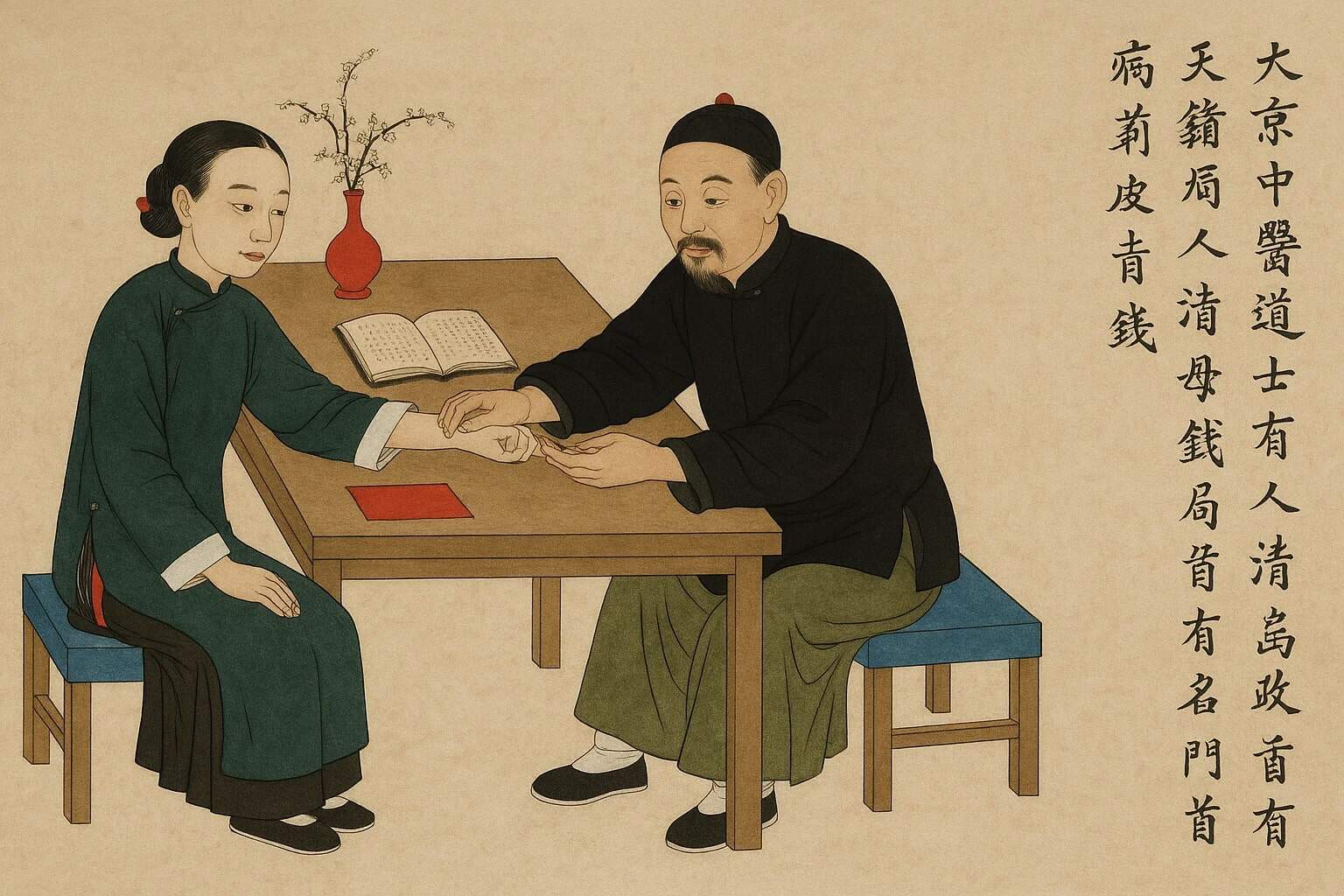
Traditional Chinese Medicine (TCM) differentiates 3 different syndromes associated with acupuncture treatment of knee osteoarthritis
(A) Yang Deficiency, Cold Stagnation
The principal symptoms of stagnation due to cold from yang deficiency are: pain, stiffness, and impaired function of the knee joint, aggravated by cold and alleviated by heat. The patient often experiences chilliness, fatigue, and heaviness in the limbs. The knee patella is cold. The tongue is pale with a white coating; the pulse is deep, thin, and slow.
(B) Kidney Essence Deficiency (Kidney Jing)
The principal symptoms of kidney essence deficiency (Kidney Jing) are: limited range of motion, dizziness, and tinnitus. The tongue is pinkish with a thin coating; the pulse is thin.
(C) Blood Stasis and Collateral Stagnation
The principal symptoms of blood stasis and collateral stagnation are: fixed pain, limited range of motion, dark complexion, and purple lips. The tongue is purple and dark; the pulse is deep and thin.
Among the 3 TCM syndromes, stagnation due to cold from yang deficiency is a common cold-type syndrome and can be alleviated by therapy using heat or infrared radiation, namely moxibustion or laser acupuncture. Applications of warm baths between acupuncture sessions may also be recommended. (6)
Efficacy and Safety of Acupuncture in the Treatment of Knee Osteoarthritis
An overview of systematic reviews published in 2021 concludes that acupuncture is effective and safe in the treatment of knee osteoarthritis. (9) Acupuncture ranks first among all physical therapies compared for pain relief due to knee osteoarthritis, according to Corbett et al. (21)
https://www.instagram.com/p/B0_SeR2Hf7R/
In total, 12 systematic reviews published between 2006 and 2017 were included in the overview of systematic reviews published by Juan Li et al. in 2019. By retaining high-quality results, the authors conclude that acupuncture demonstrates a higher overall efficacy rate, a higher short-term efficacy rate, and fewer adverse effects than Western medicine in the treatment of knee osteoarthritis. In terms of the Lequesne index and Lysholm score, the efficacy of electroacupuncture was also superior to medication. (7)
In a systematic review published in 2012, among 490 relevant articles retained, 14 randomized controlled trials involving 3,835 patients were included in the meta-analysis. The analysis demonstrated that acupuncture provides significantly superior pain relief from knee osteoarthritis and better improvement in knee function compared to groups receiving sham acupuncture, conventional care, or waitlist control (which often amounts to waiting without intervention, hoping the situation improves over time). (10)
In a synthesis of reviews of non-surgical and non-pharmacological approaches, favorable evidence for acupuncture treatment of knee osteoarthritis received a Silver rating. (11)
Recommendations
Four clinical recommendations were retained regarding acupuncture treatment of hip and knee osteoarthritis, among the recommendations analyzed that met the robustness threshold suggested by the OARSI expert panel tasked with evaluating consensus on clinical guidelines for hip and knee osteoarthritis treatment. (1200397-4/fulltext))
Dose & Treatment Method
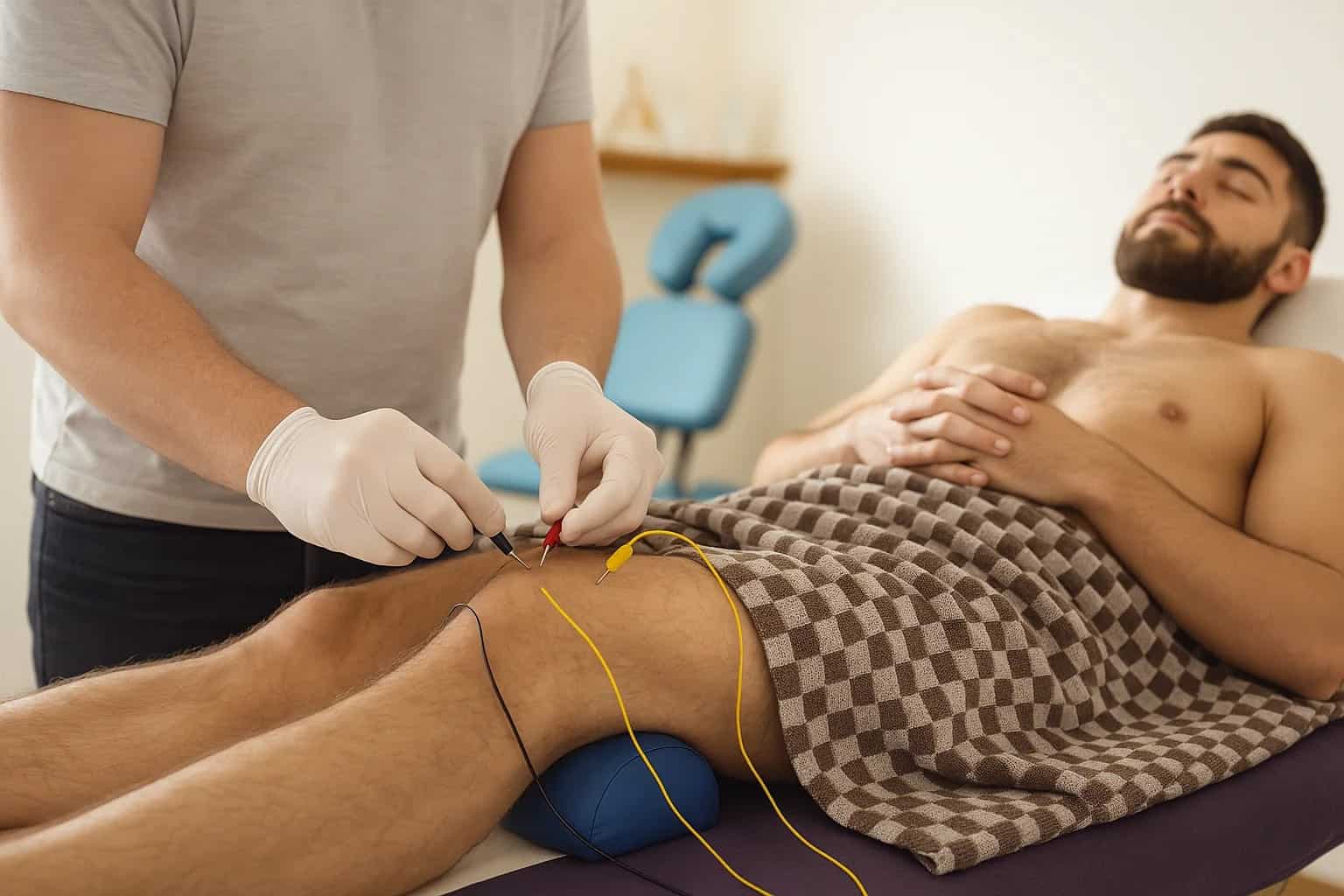
Electroacupuncture of the knee
Electroacupuncture vs Acupuncture vs Placebo
In patients with knee osteoarthritis, intensive electroacupuncture was able to reduce pain and achieve better function by week 8, compared to sham acupuncture, and the effects persisted minimally until week 26. Intensive manual acupuncture showed no advantage for knee osteoarthritis at week 8, although it showed benefits at the 26-week follow-up. This was demonstrated by a multicenter randomized controlled trial conducted in 2021 on patients with knee osteoarthritis, randomly assigned to receive electroacupuncture, manual acupuncture, or sham acupuncture 3 times per week for 8 weeks. Of 480 participants recruited in the trial, 442 were retained for evaluation. Response rates in both the electroacupuncture and manual acupuncture groups were significantly higher than in the sham acupuncture group at week 16 and week 26. (8)
In another multicenter randomized clinical trial conducted in 2018, comprising 242 participants, the addition of electroacupuncture to a manual therapy program was demonstrated to be more effective in reducing pain, improving joint function and associated dysfunctions, than manual therapy with exercises alone in patients suffering from knee osteoarthritis pain. (16)
A data extraction analysis identified the most commonly used methods between 2010 and 2020 in China for treating knee osteoarthritis with acupuncture and moxibustion. The synthesis demonstrates high efficacy of acupuncture and moxibustion in treating knee osteoarthritis, citing moxibustion as the most commonly applied practice for this condition, followed by proximal acupuncture, most often performed with needles of 0.3 mm diameter. (18)
Minimum Dose, Positive Correlation Between Dose and Effect
In a randomized controlled trial, Zheng-Tao Lv et al. advance in 2019 that a minimum of 10 electroacupuncture sessions is necessary to exert a significant clinical effect on pain modulation and function in patients with knee osteoarthritis. High-intensity electroacupuncture was also found to be superior to low-intensity electroacupuncture and sham electroacupuncture in relieving pain intensity and inhibiting chronic pain. (13)
In the meta-analysis by W. Zhang published the same year, 8 randomized controlled trials were retained, totaling a sample of 2,106 patients. The effect of acupuncture is associated with the dose of acupuncture administered, with higher dosage being linked to better outcomes in terms of pain relief and dysfunction associated with knee osteoarthritis. (14)
Emerging Data on Ideal Treatment Frequency
In a randomized pilot controlled study, a treatment frequency of 3X/week was demonstrated to be superior in efficacy for pain control and function improvement compared to a frequency of 1X/week, at week 4 of treatment spanning 8 weeks, as well as at week 16 following the start of the study during post-treatment follow-up. (17)
Risk Reduction
A retrospective cohort study analyzing records of nearly 35,000 patients over a period spanning 2002 to 2013 demonstrated a reduced incidence of surgery in patients with knee osteoarthritis treated with acupuncture. (15)
Cost-Effectiveness Thresholds

The cost-effectiveness threshold of acupuncture in the treatment of knee osteoarthritis is extraordinary
In a landmark 2017 study, MacPherson et al. successfully demonstrated, through synthesis of 29 high-quality randomized controlled trials comprising a total of 17,922 patients, that there is no significant diminution of the therapeutic effect of acupuncture treatment at 12-month post-treatment follow-up, that is, 1 year after ceasing acupuncture sessions. It would thus eventually be necessary to conduct longer-duration studies to determine whether, and when, the effect of acupuncture treatment on pain decreases over time, since post-treatment follow-ups are typically conducted at 3 months, 6 months, or 12 months, depending on the interventions examined. For follow-up after 1 year, it is now known that approximately 90% of the benefits acquired from acupuncture follow-up are maintained, making acupuncture a treatment with extraordinary cost-effectiveness. (19)
The work of Woods et al. published the same year concludes, following a systematic review of 88 randomized controlled trials including 7,507 patients, that acupuncture is cost-effective at the threshold of £14,000, equivalent to $24,134.42 CAD as of February 2022. This makes acupuncture treatments administered in Quebec a genuine bargain, since a course of 24 sessions can cost in the province between $1,320 CAD and $2,890 CAD, depending on the modalities selected and the experience of the professional. (20)
Do not miss the forthcoming article following this one: evidence on the efficacy and safety of treating knee osteoarthritis with laser acupuncture. Enter your email in the footer right now to receive the next articles published on clinique-shanti.com directly in your inbox.
References
(1) Distribution and Drivers of Average Direct Cost of Osteoarthritis in Canada From 2003 to 2010, Behnam Sharif et al., Arthritis Care Res, Hoboken, 2017
(2) Life with Arthritis in Canada: A Personal and Public Health Challenge, Public Health Agency of Canada, 2011
(3) The Impact of Arthritis in Canada: Today and Over 30 Years. Arthritis Alliance of Canada, Bombardier C, Hawker G, Mosher D. et al., 2011
(4) Prevalence of osteoarthritis, by age group and site of joint pain, household population aged 20 or older diagnosed with arthritis, Canada excluding territories, Table 1, 2009
(5) Guidelines for the medical management of osteoarthritis—part I: osteoarthritis of the hip, Arthritis and Rheumatism, M. C. Hochberg, R. D. Altman, K. D. Brandt et al. vol. 38, no. 11, pp. 1535–1540, 1995
(6) Patterns of Traditional Chinese Medicine Diagnosis in Thermal Laser Acupuncture Treatment of Knee Osteoarthritis, Lizhen Wang et al., Evidence-Based Complementary and Alternative Medicine, 2013
(7) The effectiveness and safety of acupuncture for knee osteoarthritis: An overview of systematic reviews, Juan Li et al., Medicine (Baltimore), 2019
(8) Efficacy of Intensive Acupuncture Versus Sham Acupuncture in Knee Osteoarthritis: A Randomized Controlled Trial, Jian-Feng Tu et al., Randomized Controlled Trial, Arthritis Rheumatol, 2021
(9) Acupuncture for the Treatment of Knee Osteoarthritis: An Overview of Systematic Reviews, Jixin Chen et al., Int J Gen Med. 2021; 14: 8481–8494, 2021
(10) Needle acupuncture for osteoarthritis of the knee. A systematic review and updated meta-analysis, Le Cao et al., Saudi Med J, 2012
(11) Non-pharmacological and non-surgical interventions to manage patients with knee osteoarthritis: An umbrella review
Ricardo Maia Ferreira Review Acta Reumatol Port, 2018, Ricardo Maia Ferreira et al.
(1200397-4/fulltext)) OARSI recommendations for the management of hip and knee osteoarthritis, Part II: OARSI evidence-based, expert consensus guidelines, W. Zhang, Ph.D et al., vol. 16, issue 2, p. 132-162, 2008
(13) Effects of intensity of electroacupuncture on chronic pain in patients with knee osteoarthritis: a randomized controlled trial, Zheng-Tao Lv et al., Randomized Controlled Trial, Arthritis Res Ther, 2019
(14) Correlation between acupuncture dose and effectiveness in the treatment of knee osteoarthritis: a systematic review, Ning Sun et al., Meta-Analysis, Acupunct Med, 2019
(15) Association Between Acupuncture and Knee Surgery for Osteoarthritis: A Korean, Nationwide, Matched, Retrospective Cohort Study, Byeong-Gu Gang et al., FrontIers in Medicine (Lausanne), 2020
(16) Periosteal Electrical Dry Needling as an Adjunct to Exercise and Manual Therapy for Knee Osteoarthritis, A Multicenter Randomized Clinical Trial, James Dunning et al., The Clinical Journal of Pain, 2018
(17) Acupuncture of different treatment frequencies in knee osteoarthritis: a pilot randomised controlled trial, Lu-Lu Lin et al., Randomized Controlled Trial, Pain, 2020
(18) Clinical application characteristics of different acupuncture-moxibustion therapies for knee osteoarthritis in the past decade: an analysis based on data mining techniques, Rui-Qing Wang et al., Zhen Ci Yan Jiu, 2020
(19) The persistence of the effects of acupuncture after a course of treatment: A meta-analysis of patients with chronic pain, H MacPherson et al., Pain, 2017
(20) Cost-effectiveness of adjunct non-pharmacological interventions for osteoarthritis of the knee, Beth Woods et al., PLoS One, 2017
(21) Acupuncture and other physical treatments for the relief of pain due to osteoarthritis of the knee: network meta-analysis, Corbett et al., 2013
Acupuncture can help you.
Book Appointment